こそあど言葉(これ、それ、あれ、どれ・・・):指示語(Demonstrative Words)
こそあど言葉(これ、それ、あれ、どれ・・・):指示語(Demonstrative Words)
英語.png)
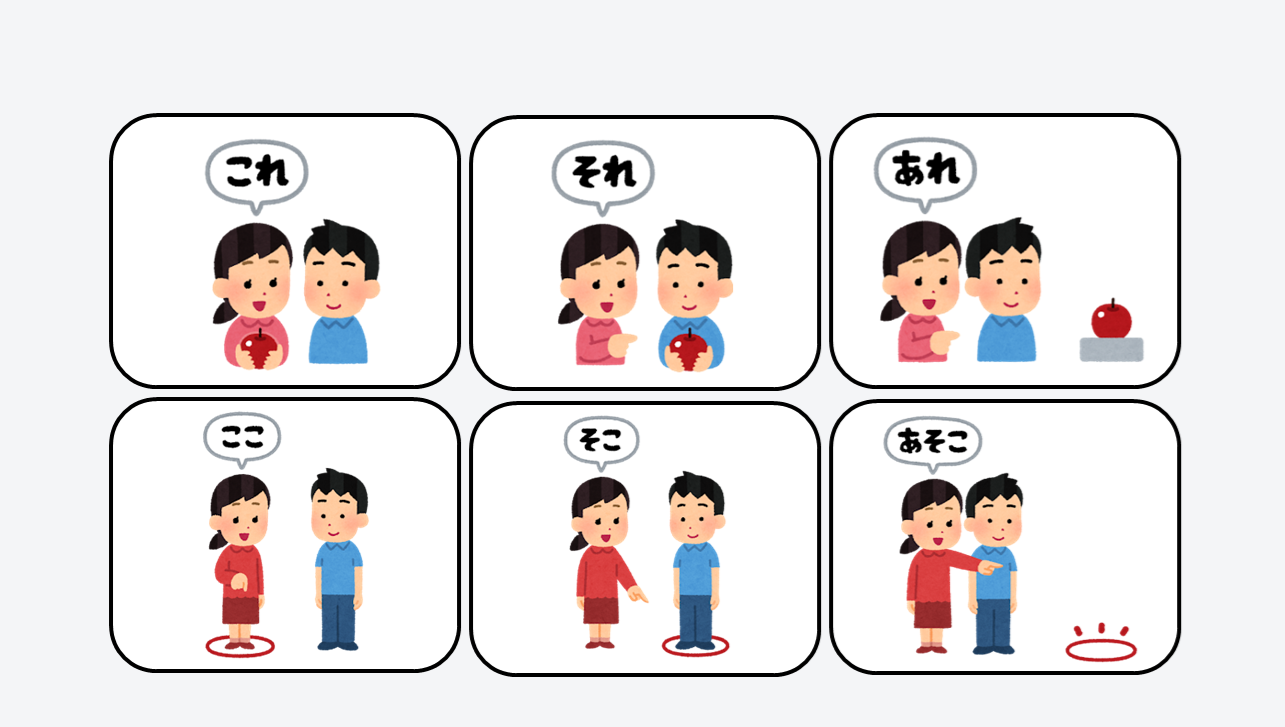
How to use 「こ・そ・あ」: When alone or when facing the same direction
単独時の「こ・そ・あ」の使い方:1人、または同じ方向を向いているとき
How to use 「こ・そ・あ」: When alone or when facing the same direction
.png)
How to use 「こ・そ・あ」: When facing each other
対面時の「こ・そ・あ」の使い方:向かい合っているとき
How to use 「こ・そ・あ」: When facing each other
.png)
How to distinguish between“そ”and“こ”in sentences
文章中の「そ」と「こ」の使い分け
How to distinguish between“そ”and“こ”in sentences
.png)
文章の中で、前に出てきた言葉や文を指す場合は「そ」を使いますが、すぐ前の文の言葉や文を指す場合は「こ」を使うこともできます。「そ」は、前に出てきた内容を、話し手と聞き手の間ですでに共有されているものとして指すときに使います。一方、「こ」は、これから説明する対象として、その内容を取り上げるときに使います。
In a sentence,“そ”is generally used to refer to a word or sentence that has been mentioned earlier. However, when referring to a word or sentence mentioned in the immediately preceding sentence,“こ”can also be used.“そ”is used when referring to previously mentioned information as something that is already shared between the speaker and the listener. On the other hand,“こ”is used when the speaker brings up that information as the topic to be explained next.
Ex.: 東京にない物が1つだけあります。それは美しい自然です。
Rm.: Tokyo ni nai mono ga hitotsu dake arimasu. Sore wa utsukushii shizen desu.
En.: There is only one thing that Tokyo does not have. It is beautiful nature.
Ex.: 私が一番欲しい物は「どこでもドア」です。このドアを開けるとどこへでも行くことができます。
Rm.: Watashi ga ichiban hoshii mono wa“Doko demo doa”desu. Kono doa o akeru to doko e demo iku koto ga dekimasu.
En.: The thing I want most is an “Anywhere Door.” If I open this door, I can go anywhere.

英語-320x180.png)
英語.png)
英語.png)