
Sentence Pattern: Noun + と + Verb (Action)
Sentence Pattern: Noun + と + Verb (Action)
Grammar Explanation: Indicates that both parties cooperate and perform an action together, rather than acting unilaterally.

Ex.: 明日、友達と会う予定です
Rm.: Ashita, tomodachi to au yotei desu.
En.: I plan to meet a friend tomorrow.

Ex.: 部長と打ち合わせするつもりです。
Rm.: Buchou to uchiawase suru tsumori desu.
En.: I plan to have a meeting with my department manager.

Ex.: 毎日、彼女とビデオ通話で話しています。
Rm.: Mainichi, kanojo to bideo tsuuwa de hanashite imasu.
En.: I video chat with my girlfriend every day.

Ex.: 昨日、友達といっしょに映画を観ました。
Rm.: Kinou, tomodachi to issho ni eiga o mimashita.
En.: I watched a movie with a friend yesterday.
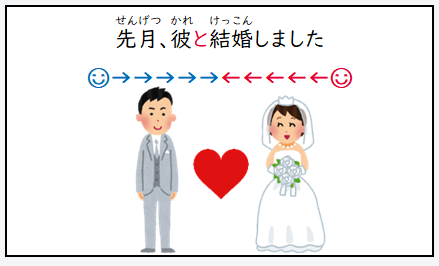
Ex.: 先月、彼と結婚しました。
Rm.: Sengetsu, kare to kekkon shimashita.
En.: I married my boyfriend last month.
Sentence Pattern: Noun + に + Verb (Action)
Sentence Pattern: Noun + に + Verb (Action)
Grammar Explanation: Indicates that an action is initiated by one party and directed toward another.

Ex.: デパートで、偶然友達に会いました。
Rm.: Depaato de, guuzen tomodachi ni aimashita.
En.: I ran into a friend at a department store.

Ex.: 進路について先生に相談するつもりです。
Rm.: Shinro ni tsuite sensei ni soudan suru tsumori desu.
En.: I plan to consult my teacher about my future career path.

Ex.: 明日患者に告知しなければなりません。
Rm.: Ashita kanja ni kokuchi shinakereba narimasen.
En.: I have to inform the patient of their diagnosis tomorrow.

Ex.: 今日の午後彼女に告白するつもりです。
Rm.: Kyou no gogo kanojo ni kokuhaku suru tsumori desu.
En.: I plan to confess my feelings to her this afternoon.

Ex.: お婆さんは警官に道を尋ねました。
Rm.: Obaasan wa keikan ni michi o tazunemashita.
En.: The old woman asked a police officer for directions.


Ex.: 先月、彼に結婚しました。(Incorrect)
「と」は双方が共同で行う動作を表し、「に」は一方から相手に働きかける動作を表します。
結婚は双方が共同で行うものであり、一方だけでは成立しません。そのため「に」は使えません。
“と (to)” indicates an action performed jointly by both parties, whereas “に (ni)” denotes an action directed by one party toward another. Marriage is something that both parties enter into together; it cannot be brought about by just one person. Therefore, “に (ni)” cannot be used.


