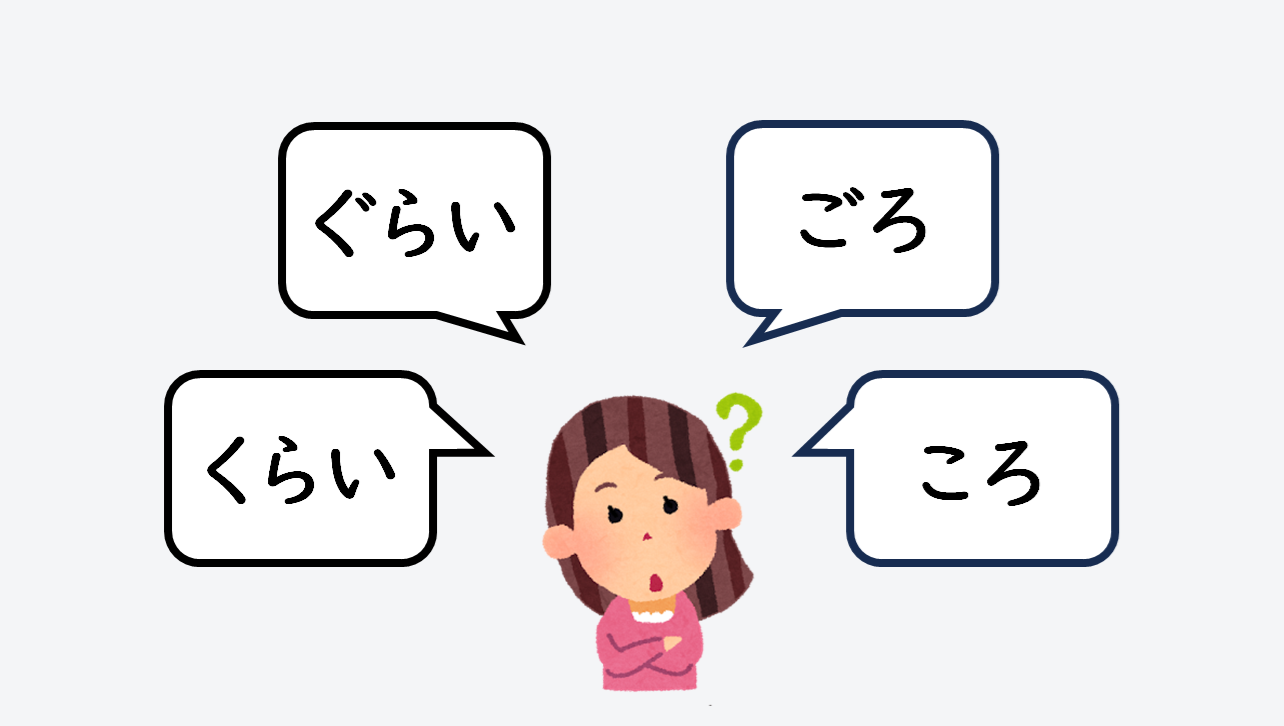
具体的な時間(Specific Time):ごろ(About/Around)
Sentence Pattern: 具体的な時間(Specific Time)+ごろ
Grammar Explanation: About/Around

Ex.: 毎晩7時ごろに晩御飯を食。
Rm.: Maiban shichiji goro ni bangohan o tabemasu.
En.: I usually have dinner around 7 p.m. every night.
Ex.: 毎晩7時ぐらい(くらい)に晩御飯を食べます。
Rm.: Maiban shichiji gurai (kurai) ni bangohan o tabemasu.
En.: I usually have dinner around 7 p.m. every night.
Ex.: 毎晩7時ころに晩御飯を食べます。
Rm.: Maiban shichiji koro ni bangohan o tabemasu.
En.: This sentence is incorrect.

Ex.: 今年の秋ごろに、子供が生まれる予定です。
Rm.: Kotoshi no aki goro ni, kodomo ga umareru yotei desu.
En.: We’re expecting a baby around this fall.
Ex.: 今年の秋ぐらい(くらい)に、子供が生まれる予定です。
Rm.: Kotoshi no aki gurai (kurai) ni, kodomo ga umareru yotei desu.
En.: We’re expecting a baby around this fall.
Ex.: 今年の秋ころに、子供が生まれる予定です。
Rm.: Kotoshi no aki koro ni, kodomo ga umareru yotei desu.
En.: This sentence is incorrect.
時期・期間(Season/Period):ころ(Around the Time)
Sentence Pattern: Verb (Plain Form) + ころ
Grammar Explanation: Around the Time

Ex.: そろそろ桜が咲くころです。
Rm.: Soro soro sakura ga saku koro desu.
Ex.: It’s about time the cherry blossoms start to bloom.
Ex.: そろそろ桜が咲くごろです。
Rm.: Soro soro sakura ga saku goro desu.
En.: This sentence is incorrect.
Ex.: そろそろ桜が咲くくらい(ぐらい)です。
Rm.: Soro soro sakura ga saku kurai (gurai) desu.
En.: This sentence is incorrect.
Sentence Pattern: I-adjective (Plain Form) + ころ
Grammar Explanation: Around the Time

Ex.: 若いころはよく旅行しました。
Rm.: Wakai koro wa yoku ryokō shimashita.
En.: When we were younger, we used to travel quite often.
Ex.: 若いごろはよく旅行しました。
Rm.: Wakai goro wa yoku ryokō shimashita.
En.: This sentence is incorrect.
Ex.: 若いくらい(ぐらい)はよく旅行しました。
Rm.: Wakai kurai (gurai) wa yoku ryoko shimashita.
En.: This sentence is incorrect.
Sentence Pattern: Na-adjective (Plain Form) + ころ
Grammar Explanation: Around the Time

Ex.: 元気なころは、毎日ジョギングしていました。
Rm.: Genki na koro wa, mainichi jogingu shite imashita.
En.: When we were younger, we used to travel quite often.
Ex.: 元気なごろは、毎日ジョギングしていました。
Rm.: Genki na goro wa, mainichi jogingu shite imashita.
En.: This sentence is incorrect.
Ex.: 元気なくらい(ぐらい)は、毎日ジョギングしていました。
Rm.: Genki na kurai (gurai) wa, mainichi jogingu shite imashita.
En.: This sentence is incorrect.
Sentence Pattern: Noun+の+ころ
Grammar Explanation: Around the Time

Ex.: 子供のころ、人参が大嫌いでした。
Rm.: Kodomo no koro, ninjin ga daikirai deshita.
En.: When we were younger, we used to travel quite often.
Ex.: 子供のごろ、人参が大嫌いでした。
Rm.: Kodomo no goro, ninjin ga daikirai deshita.
En.: This sentence is incorrect.
Ex.: 子供のくらい(ぐらい)、人参が大嫌いでした。
Rm.: Kodomo no kurai (gurai), ninjin ga daikirai deshita.
En.: This sentence is incorrect.
数量(Quantity):くらい/ぐらい(About/Around)
Sentence Pattern: Numeral + Counter Word + くらい/ぐらい
Grammar Explanation: About/Around (Quantity)

Ex.: 体重は42キロぐらい(くらい)です。
Rm.: Taiju wa 42 kiro gurai (kurai) desu.
En.:I weigh about 42 kilograms.
Ex.: 体重は42キロごろです。
Rm.: Taiju wa 42 kiro goro desu.
En.: This sentence is incorrect.
Ex.: 体重は42キロころです。
Rm.: Taiju wa 42 kiro koro desu.
En.: This sentence is incorrect.

Ex.: 毎晩1時間ぐらい(くらい)犬の散歩をしています。
Rm.: Maiban ichijikan gurai (kurai) inu no sanpo o shite imasu.
En.: I usually walk my dog for about an hour every night.
Ex.: 毎晩1時間ごろ犬の散歩をしています。
Rm.: Maiban ichijikan goro inu no sanpo o shite imasu.
En.: This sentence is incorrect.
Ex.: 毎晩1時間ころ犬の散歩をしています。
Rm.: Maiban ichijikan koro inu no sanpo o shite imasu.
En.: This sentence is incorrect.
程度(Degree):くらい/ぐらい(About/Around)
Sentence Pattern: Verb (Plain Form) + くらい/ぐらい
Grammar Explanation: About/Around (Degree)

Ex.: お腹が痛くなるぐらい(くらい)笑いました。
Rm.: Onaka ga itaku naru gurai (kurai) waraimashita.
En.: I laughed so much that my stomach hurt.
Ex.: お腹が痛くなるごろ笑いました。
Rm.: Onaka ga itaku naru goro waraimashita.
En.: This sentence is incorrect.
Ex.: お腹が痛くなるころ笑いました。
Rm.: Onaka ga itaku naru koro waraimashita.
En.: This sentence is incorrect.
Sentence Pattern: I-adjective + くらい/ぐらい
Grammar Explanation: About/Around (Degree)

Ex.: 事務所は寒いぐらい(くらい)冷房が効いています。
Rm.: Jimusho wa samui gurai (kurai) reibo ga kiite imasu.
En.: The office air conditioning is so strong that it’s cold.
Ex.: 事務所は寒いごろ冷房が効いています。
Rm.: Jimusho wa samui goro reibo ga kiite imasu.
En.: This sentence is incorrect.
Ex.: 事務所は寒いころ冷房が効いています。
Rm.: Jimusho wa samui koro reibo ga kiite imasu.
En.: This sentence is incorrect.
Sentence Pattern: Na-adjective + くらい/ぐらい
Grammar Explanation: About/Around (Degree)

Ex.: 彼は心配なぐらい(くらい)痩せています。
Rm.: Kare wa shinpai na gurai (kurai) yasete imasu.
En.: He’s so thin that it’s worrying.
Ex.: 彼は心配なごろ痩せています。
Rm.: Kare wa shinpai na goro yasete imasu.
En.: This sentence is incorrect.
Ex.: 彼は心配なころ痩せています。
Rm.: Kare wa shinpai na koro yasete imasu.
En.: This sentence is incorrect.
Sentence Pattern: Noun + くらい/ぐらい
Grammar Explanation: About/Around (Degree)

Ex.: 彼らは親子ぐらい(くらい)年が離れています。
Rm.: Karera wa oyako gurai (kurai) toshi ga hanarete imasu.
En.: They have such a big age gap that they could be parent and child.
Ex.: 彼らは親子ごろ年が離れています。
Rm.: Karera wa oyako goro toshi ga hanarete imasu.
En.: This sentence is incorrect.
Ex.: 彼らは親子ころ年が離れています。
Rm.: Karera wa oyako koro toshi ga hanarete imasu.
En.: This sentence is incorrect.


