御節料理(Japanese New Year’s dishes)
御節料理(Japanese New Year’s dishes)
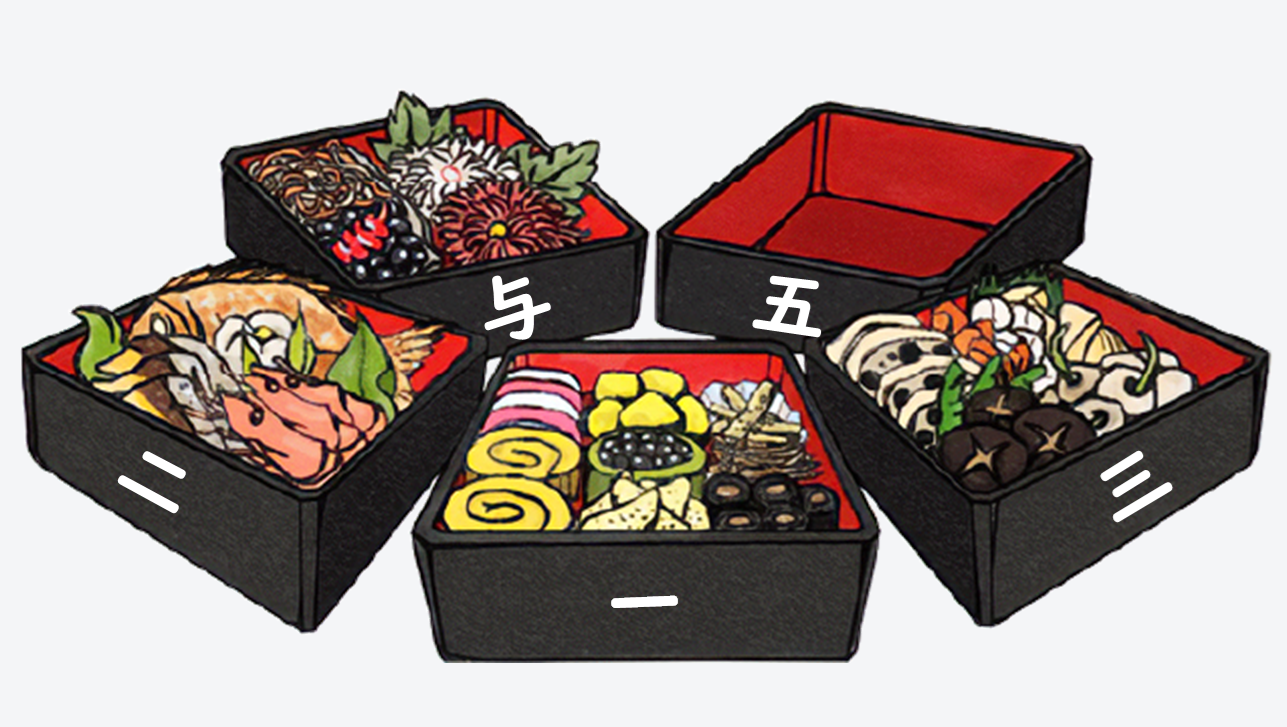
御節料理とは、日本で新暦元旦に食べる重箱に詰められた料理のことです。
御節料理の食材やメニューには「五穀豊穣」「無病息災」「子孫繁栄」等の願いが込められており、「目出度さを重ねる」という意味を込めて重箱に詰められています。
Japanese New Year’s dishes, called Osechi, are meals packed in stacked boxes (jubako) and eaten on January 1st. Each ingredient and dish carries wishes such as “abundant harvest,” “good health,” and “prosperous descendants.” Arranging the dishes tier by tier in the boxes symbolizes the accumulation of good fortune.
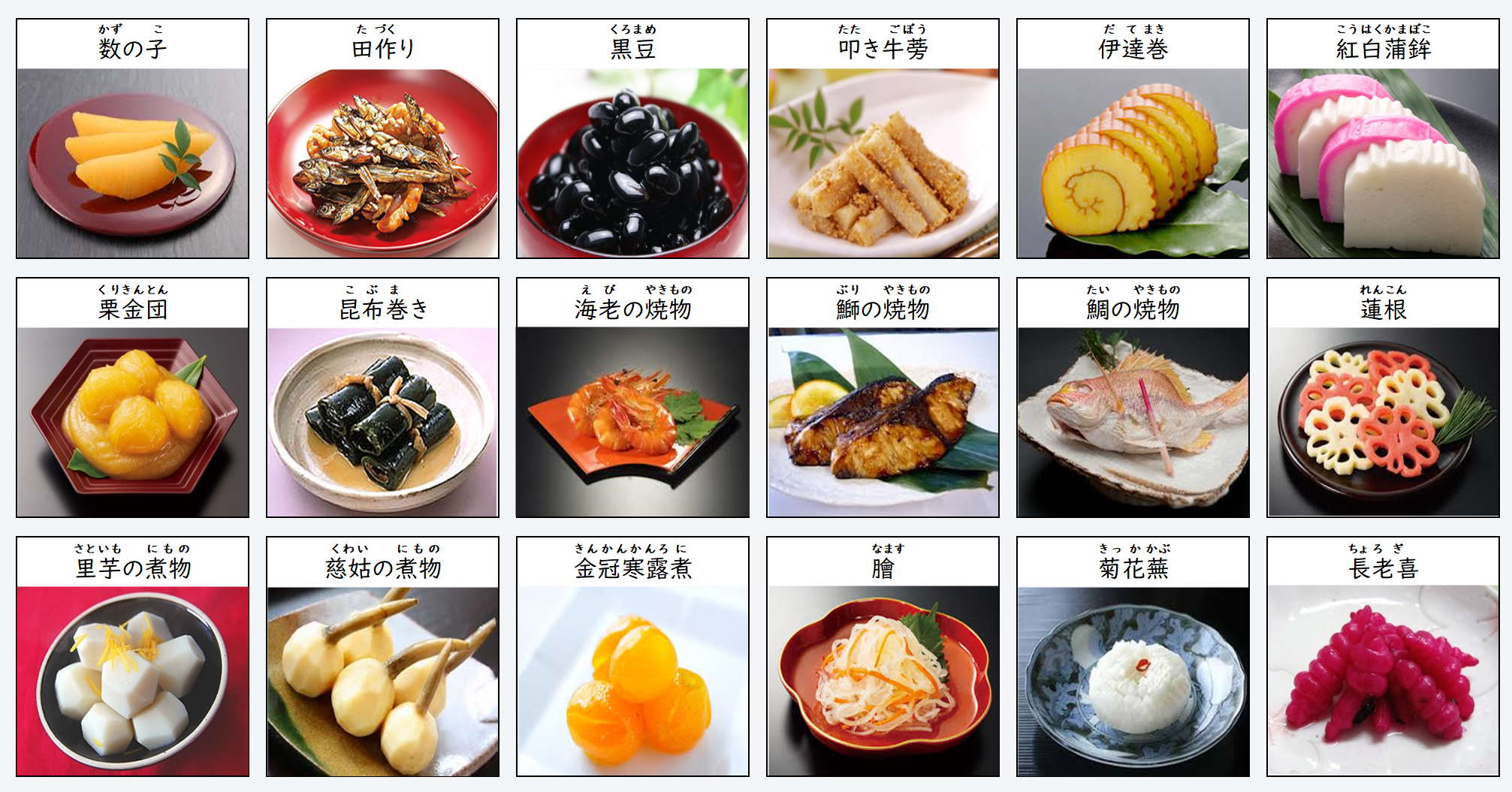
一の重(First Tier)
一の重(First Tier)御節の主役の祝い肴の段です(Main celebratory dish of Osechi)
●数の子(Herring Roe)
「二親健在」の「二親」の発音が「鯡」と同じことから、両親が健在で子孫が繁栄するという意味があります。
Kazunoko (herring roe) symbolizes the health of both parents and the prosperity of descendants, because “nishin” (herring) sounds like “nishin” in the phrase for parental health.
●田作り(Dried Sardines)
鰯が畑の肥料にされていたことから「五万米」とも言われます。
It is also called “50,000 rice” because sardines were used as fertilizer for fields.
●黒豆(Sweet Black Soybeans)
勤勉と丈夫という二つの意味があります。
It has two meanings: diligence and strength.
●叩き牛蒡(Pounded Burdock Root)
牛蒡のように深く根を張り子孫が繁栄することを願っています。
Burdock symbolizes deep roots and a wish for the prosperity of descendants.
●伊達巻き(Sweet Rolled Omelette)
昔のロール状の書物や掛け軸に似ているため、知識や文化の発展を願う意味があります。
It is a wish for the development of knowledge and culture because it resembles old rolled books and hanging scrolls.
●紅白蒲鉾(Red and White Kamaboko)
紅は魔除け、白は清浄を意味し、お目出度い食べ物です。
It is a wish for the development of knowledge and culture because it resembles old rolled books and hanging scrolls.
●栗金団(Sweet Mashed Chestnuts)
勝ち栗とも呼ばれる縁起物で、金色に輝く金団は豊かな財産を願っています。
Also known as Kachikuri, this is a lucky charm, and the golden kinton represents a wish for abundant wealth.
●昆布巻き(Kombu Rolls)
「喜ぶ」と「昆布」をかけ、喜びに満ちた1年になること願っています。
Combining the words “joy” and “konbu” (kelp), it represents a year full of joy.
二の重(Second Tier)
二の重(Second Tier)海の幸の焼き物を豪華に飾ります(Grilled seafood is displayed in a lavish manner)
●蝦(Shrimp)
蝦のように長生きできることを祈ります(蝦の曲がっている様子が老人の姿に似ているため)
It represents a prayer for a long life like a shrimp (because the curved shape of a shrimp resembles the figure of an old man).
●鰤(Yellowtail)
鰤は成長ごとに名前が変わる「出世魚」なので、鰤のように出世することを願っています。
Yellowtail is a “fish that rises in rank” that changes its name as it grows, so it is hoped that it will rise in rank like a yellowtail.
●鯛(Tai)
鯛は「目出度い=目出鯛」をかけてお祝いの魚として使われます。
Tai is used as a celebratory fish, as its name sounds like ‘medetai,’ meaning ‘congratulations’.
三の重(Third Tier)
三の重(Third Tier)煮物中心の惣菜を詰めます(It is filled with side dishes, mainly stews)
●蓮根(Lotus Root)
蓮根には多数の穴が開いているため「将来が見通せますように」という願いが込められています。
Lotus root has many holes, which represents the wish “to be able to see into the future.”
●里芋(Japanese Taro)
里芋は連なって収穫されるため、子孫繁栄を象徴しています。
Japanese Taro is harvested in a row, so it symbolizes the prosperity of descendants.
●慈姑(Arrowhead)
大きな芽がでた様子から「目出度い」という意味があります。
Its large sprout symbolizes good luck and celebration.
●金柑(Kumquat)
金は財宝を表し、柑は幸運を表しています。
The ‘gold’ represents wealth, and the ‘citrus’ represents good fortune.
与(四)の重(Fourth Tier)
与(四)の重(Fourth Tier)酢の物や和え物を詰めます(Filled with vinegared dishes and salads)
●紅白膾(Pickled Julienned Carrot and White Radish)
赤い人参と白い大根で「お祝い」の意味があり、根菜なので「しっかり根を張る」という意味もあります。
Red carrots and white radishes mean “celebration,” and as they are root vegetables, they also mean “to put down firm roots.”
●菊花蕪(Chrysanthemum-Shaped Turnip)
菊は「邪気を払う」とされ、不老長寿の象徴です。
Chrysanthemums are said to “ward off evil spirits” and are a symbol of eternal youth and longevity.
●長老喜(Chinese Artichoke)
「千代呂木」とも書き、長寿を願っています。
Also written as “千代呂木” (Chorogi), it is a symbol of longevity.
五の重(Fifth Tier)
五の重(Fifth Tier)空のまま何も入れません(This tier is left empty)
●控えの重とも呼ばれ、神様から授かった福を詰めるため、空のままにしておきます。
Also called a reserve layer, this tier is left empty to be filled with the good fortune bestowed by the gods.