英語.png)
Sentence Pattern: Noun+はどうですか (How is ~?)
Sentence Pattern: Noun+はどうですか
Grammar Explanation: How is ~?

相手が経験したこと、訪れた場所、出会った人の印象・意見・感想を尋ねます。
This expression is used to ask about someone’s impressions, opinions, or feelings regarding experiences they have had, places they have visited, or people they have met.
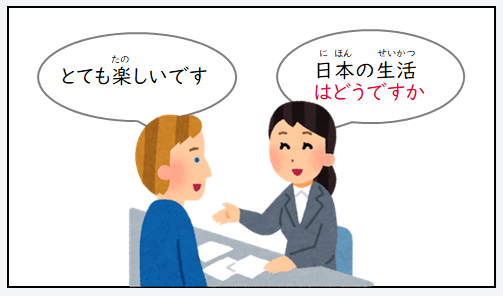
Ex.: 日本の生活はどうですか。
Rm.: Nihon no seikatsu wa dou desu ka.
En.: How is life in Japan?
Ex.: とても楽しいです。
Rm.: Totemo tanoshii desu.
En.: It’s very enjoyable.
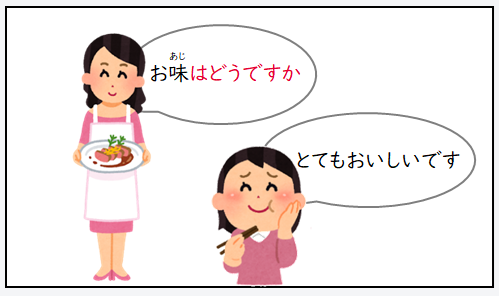
Ex.: お味はどうですか。
Rm.: Oaji wa dou desu ka.
En.: How does it taste?
Ex.: とてもおいしいです。
Rm.: Totemo oishii desu.
En.: It’s very delicious.
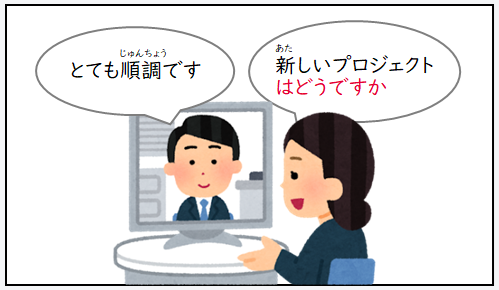
Ex.: 新しいプロジェクトはどうですか。
Rm.: Atarashii purojekuto wa dou desu ka.
En.: How is the new project?
Ex.: とても順調です。
Rm.: Totemo junchoo desu.
En.: It’s going very well.
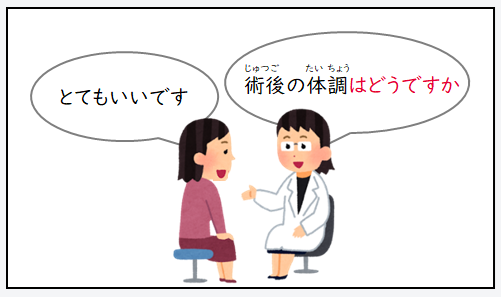
Ex.: 術後の体調はどうですか。
Rm.: Jutsugo no taichoo wa dou desu ka.
En.: How are you feeling after the surgery?
Ex.: とてもいいです。
Rm.: Totemo ii desu.
En.: I’m feeling very good.
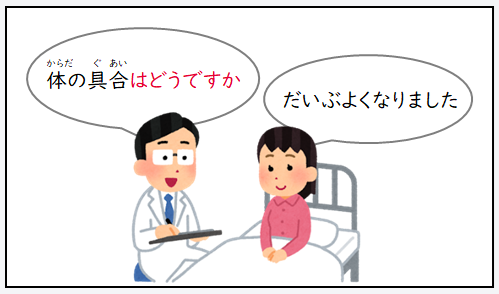
Ex.: 体の具合はどうですか。
Rm.: Karada no guai wa dou desu ka.
En.: How are you feeling?
Ex.: だいぶよくなりました。
Rm.: Daibu yoku narimashita.
En.: I’ve gotten much better.
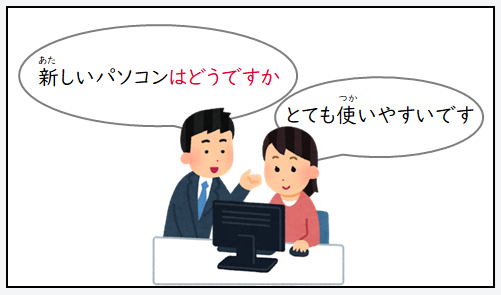
Ex.: 新しいパソコンはどうですか。
Rm.: Atarashii pasokon wa dou desu ka.
En.: How is your new computer?
Ex.: とても使いやすいです。
Rm.: Totemo tsukaiyasui desu.
En.: It’s very easy to use.
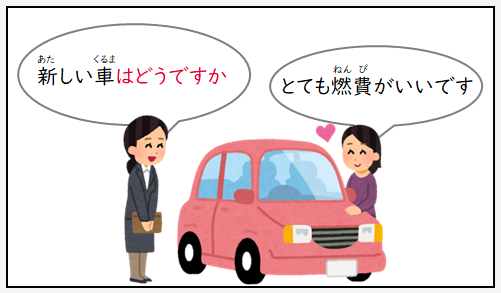
Ex.: 新しい車はどうですか。
Rm.: Atarashii kuruma wa dou desu ka.
En.: How is your new car?
Ex.: とても燃費がいいです。
Rm.: Totemo nenpi ga ii desu.
En.: It has very good fuel efficiency.
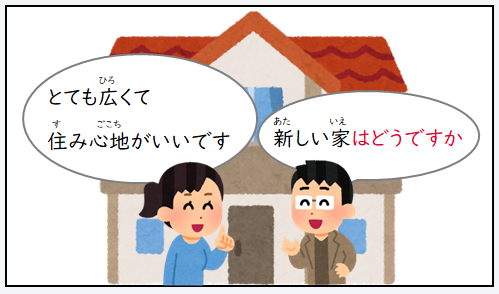
Ex.: 新しい家はどうですか。
Rm.: Atarashii ie wa dou desu ka.
En.: How is your new house?
Ex.: とても広くて住み心地がいいです。
Rm.: Totemo hirokute sumigokochi ga ii desu.
En.: It’s very spacious and comfortable to live in.
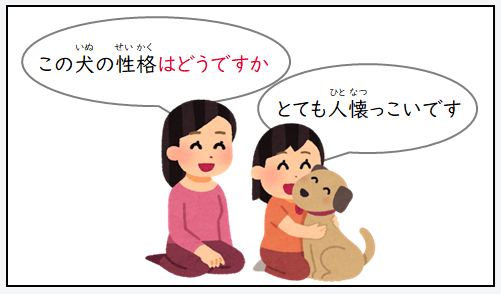
Ex.: この犬の性格はどうですか。
Rm.: Kono inu no seikaku wa dou desu ka.
En.: What is this dog’s personality like?
Ex.: とても人懐っこいです。
Rm.: Totemo hitonatsukkoi desu.
En.: It’s very friendly and affectionate.
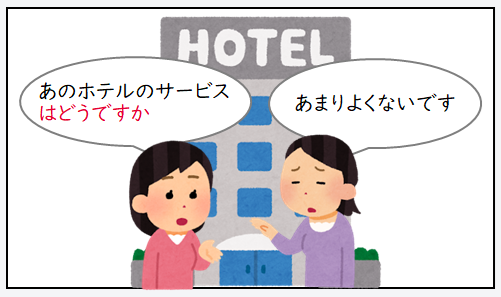
Ex.: あのホテルのサービスはどうですか。
Rm.: Ano hoteru no saabisu wa dou desu ka.
En.: How is the service at that hotel?
Ex.: あまりよくないです。
Rm.: Amari yokunai desu.
En.: It’s not very good.
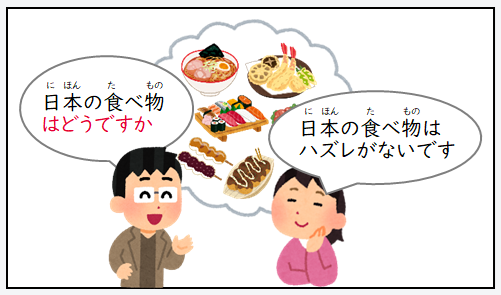
Ex.: 日本の食べ物はどうですか。
Rm.: Nihon no tabemono wa dou desu ka.
En.: How is Japanese food?
Ex.: 日本の食べ物はハズレがないです。
Rm.: Nihon no tabemono wa hazure ga nai desu.
En.: You can’t go wrong with Japanese food.
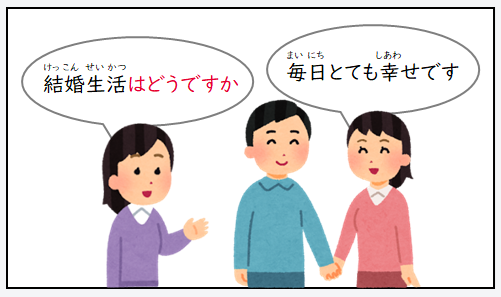
Ex.: 結婚生活はどうですか。
Rm.: Kekkon seikatsu wa dou desu ka.
En.: How is married life?
Ex.: 毎日とても幸せです。
Rm.: Mainichi totemo shiawase desu.
En.: I’m very happy every day.
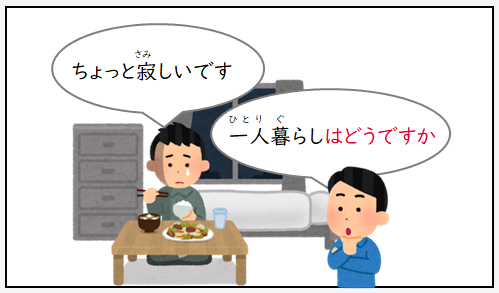
Ex.: 一人暮らしはどうですか。
Rm.: Hitorigurashi wa dou desu ka.
En.: How is living alone?
Ex.: ちょっと寂しいです。
Rm.: Chotto sabishii desu.
En.: It’s a little lonely.
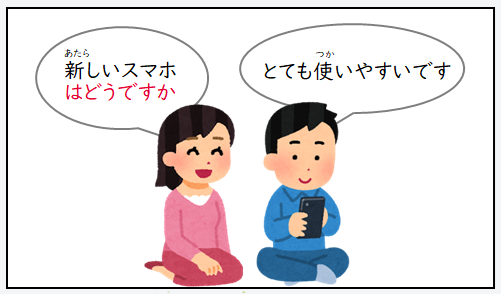
Ex.: 新しいスマホはどうですか。
Rm.: Atarashii sumaho wa dou desu ka.
En.: How is your new smartphone?
Ex.: とても使いやすいです。
Rm.: Totemo tsukaiyasui desu.
En.: It’s very easy to use.
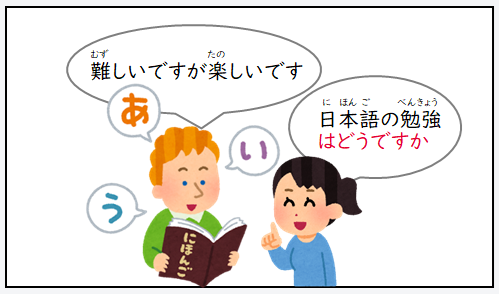
Ex.: 日本語の勉強はどうですか。
Rm.: Nihongo no benkyoo wa dou desu ka.
En.: How is studying Japanese?
Ex.: 難しいですが楽しいです。
Rm.: Muzukashii desu ga tanoshii desu.
En.: It’s difficult, but enjoyable.
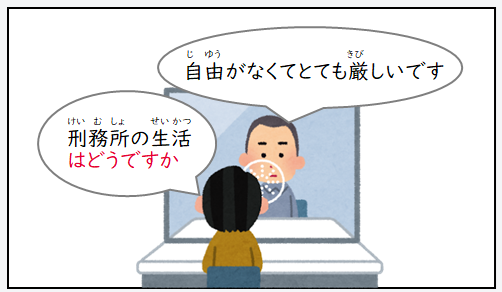
Ex.: 刑務所の生活はどうですか。
Rm.: Keimusho no seikatsu wa dou desu ka.
En.: How is life in prison?
Ex.: 自由がなくてとても厳しいです。
Rm.: Jiyuu ga nakute totemo kibishii desu.
En.: It’s very strict because there is no freedom.
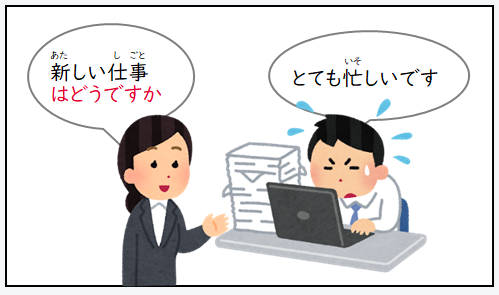
Ex.: 新しい仕事はどうですか。
Rm.: Atarashii shigoto wa dou desu ka.
En.: How is your new job?
Ex.: とても忙しいです。
Rm.: Totemo isogashii desu.
En.: It’s very busy.
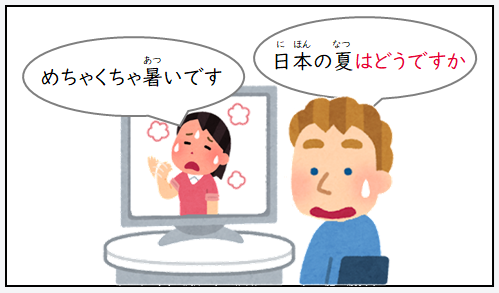
Ex.: 日本の夏はどうですか。
Rm.: Nihon no natsu wa dou desu ka.
En.: How is summer in Japan?
Ex.: めちゃくちゃ暑いです。
Rm.: Mechakucha atsui desu.
En.: It’s extremely hot.
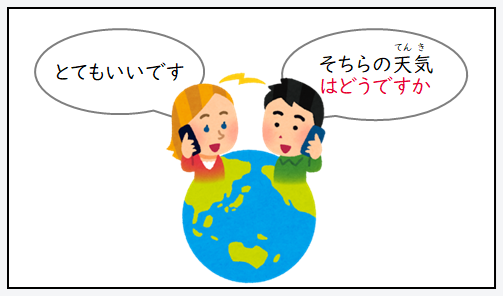
Ex.: そちらの天気はどうですか。
Rm.: Sochira no tenki wa dou desu ka.
En.: How is the weather there?
Ex.: とてもいいです。
Rm.: Totemo ii desu.
En.: It’s very nice.
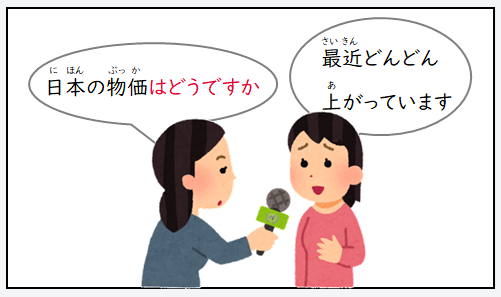
Ex.: 日本の物価はどうですか。
Rm.: Nihon no bukka wa dou desu ka.
En.: How are prices in Japan?
Ex.: 最近どんどん上がっています。
Rm.: Saikin dondon agatte imasu.
En.: Prices have been rising more and more recently.
Reference: Minna no Nihongo Lesson 8

英語-320x180.png)
英語.png)
英語.png)