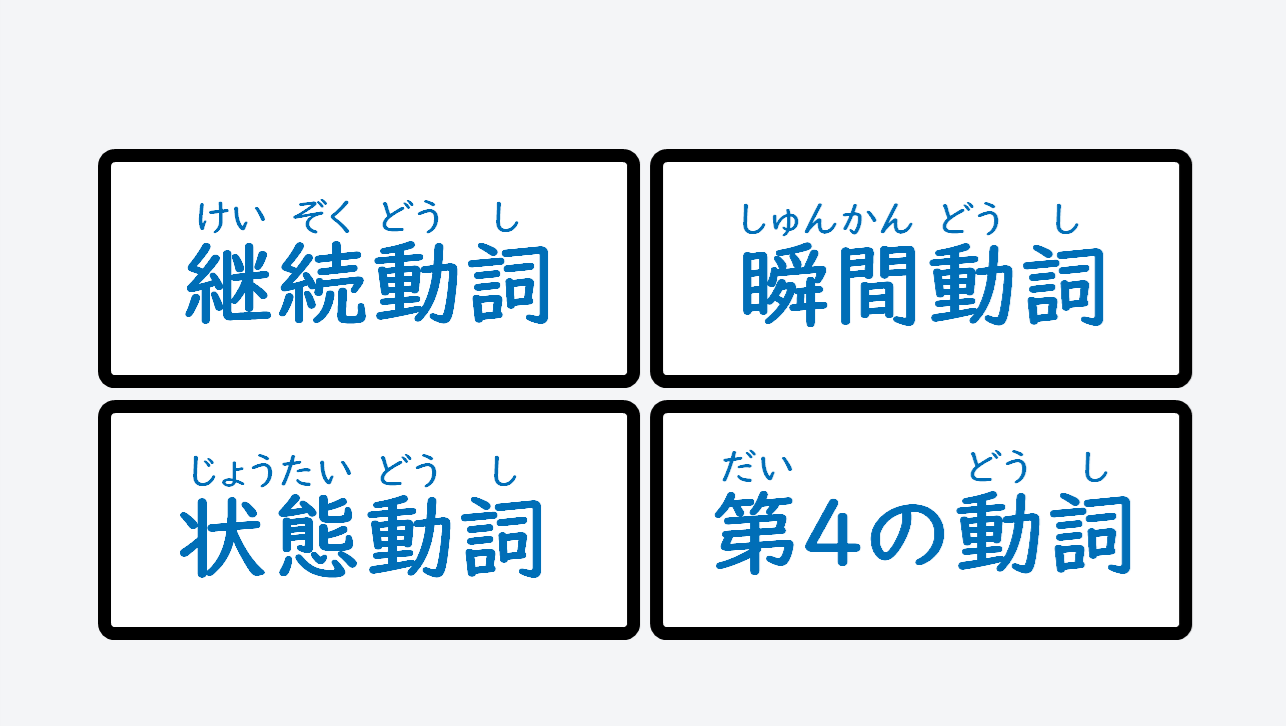
継続動詞(Continuous Verbs)
継続動詞:継続して行われる「動作・行為」を表します。
Continuous Verbs: It indicates an action or activity that is ongoing.
Ex.: 食べます (eat), 飲みます (drink), 書きます (write), 読みます (read), 買います (buy), 話します (speak), etc.
継続動詞の変化(State Changes of Continuous Verbs)
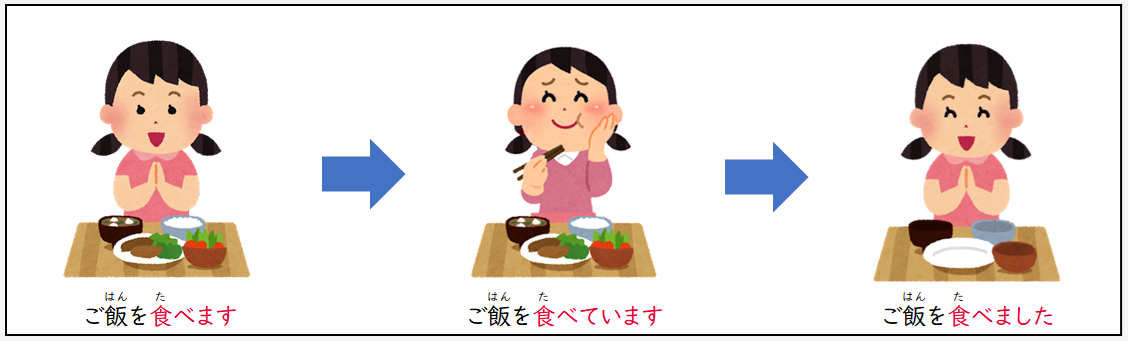
| ご飯を食べます | ご飯を食べています | ご飯を食べました |
| Eat a meal | Be eating a meal | Ate a meal |
Sentence Pattern: Continuous Verb (Te-form) + ています
Grammar Explanation: Indicates an action in progress (be + verb-ing)
瞬間動詞(Instantaneous Verbs)
瞬間動詞:瞬間で完了してしまう「動作・作用」を表します。
Instantaneous Verbs: It expresses an action or event that is completed instantly.
Ex.: 点けます (turn on), 消します (turn off), 座ります (sit down), 結婚します (get married), 住みます (live), 着ます (wear), etc.
瞬間動詞の変化(State Changes of Instantaneous Verbs)
.png)
| 電気が点きました | 電気が点いています | 電気が消えました |
| The light turned on | The light is on | The light turned off |
Sentence Pattern: Instantaneous Verb (Te-form) + ています
Grammar Explanation: Indicates a resulting state that continues (a completed action with ongoing result)

「瞬間動詞のている形+名詞」と「瞬間動詞のた形+名詞」は、どちらも動作・作用が完了した結果の状態を表すため、同じ意味になります。
Both the “Instantaneous verb (te-iru form) + noun” and the “Instantaneous verb (ta-form) + noun” express the resulting state of a completed action, so they have the same meaning.
.png)
| サングラスをかけている人 | サングラスをかけた人 |
| a person wearing sunglasses | a person wearing sunglasses |
「継続動詞のている形+名詞」は動作の進行中を表し、「継続動詞のた形+名詞」は動作の完了を表すため、同じ意味にはなりません。
“Continuous verb (te-iru form) + noun” indicates an ongoing action, while “continuous verb (ta form) + noun” indicates a completed action; therefore, they do not have the same meaning.
.png)
| ご飯を食べている人 | ご飯を食べた人 |
| a person eating a meal | a person who ate a meal |
瞬間動詞(Instantaneous verb):知ります(Shirimasu)
.png)
| 知ります | 知っています | 知りません |
| Found out / Learn | Know | Don’t know |
瞬間動詞「知ります」の変化(State Changes of the Instantaneous Verb “知ります”)
.png)
| 知りました | 知っています | 忘れました |
| I found out | Know | I forgot |
状態動詞(Stative Verbs)
状態動詞:すでに状態を表しているため、「~ている」の形にできない動詞です。
Instantaneous Verbs: These are verbs that cannot take the“~ている”form because they already express a state.
Ex.: あります (to exist for plants and things), います (to exist for animals and humans), できます (can do), 値します (to be worth), etc.
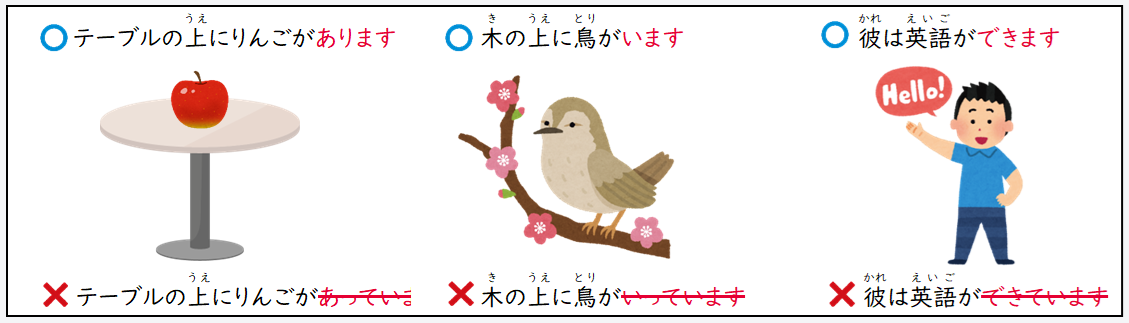
| テーブルの上に林檎があります | 木の上に鳥がいます | 彼は英語ができます |
| There is an apple on the table | There is a bird in the tree | He can speak English |
| テーブルの上に林檎が | 木の上に鳥が | 彼は英語が |
| This sentence is incorrect | This sentence is incorrect | This sentence is incorrect |
第4の動詞(Type 4 Verbs)
第4の動詞:常に「~ています」の形で用いられる動詞です。
Type 4 Verbs: These verbs are always used in the“~ている”form.
Ex.: 聳えています (be towering), 優れています (be excellent), 似ています (resemble), 尖っています (be sharp), etc.
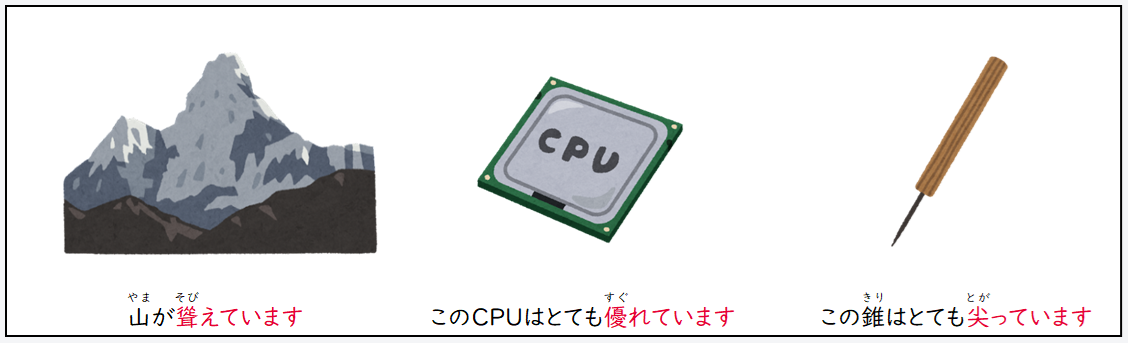
| 山が聳えています | このCPUはとても優れています | この錐はとても尖っています |
| The mountain is towering | This CPU is excellent | This awl is very sharp |

英語-320x180.png)
英語.png)
英語版.png)