英語版.png)
Sentence Pattern: Verb (Plain Form) + ようです (It seems that ~)
Sentence Pattern: Verb (Plain Form) + ようです
Grammar Explanation: It seems that ~ (Subjective Inference)

話し手が自分の感覚・知覚でとらえたその場の状況を基に、主観的に判断し推測します。
This expression is used when the speaker makes a subjective inference based on what they perceive through their own senses and observations in a given situation.
Ex.: 交通事故があったようです。
Rm.: Koutsuu jiko ga atta you desu.
En.: It seems that there was a traffic accident.
Ex.: 彼女は家にいないようです。
Rm.: Kanojo wa ie ni inai you desu.
En.: It seems that she isn’t home.
Ex.: 彼は離婚したようです。
Rm.: Kare wa rikon shita you desu.
En.: It seems that he got divorced.
Ex.: 彼は日本語の試験を受けなかったようです。
Rm.: Kare wa nihongo no shiken o ukenakatta you desu.
En.: It seems that he didn’t take the Japanese exam.
Sentence Pattern: I-Adjective (Plain Form) + ようです (It seems that ~)
Sentence Pattern: I-Adjective (Plain Form) + ようです
Grammar Explanation: It seems that ~ (Subjective Inference)
Ex.: 外は暑いようです。
Rm.: Soto wa atsui you desu.
En.: It seems that it’s hot outside.
Ex.: 彼の評判は良くないようです。
Rm.: Kare no hyouban wa yokunai you desu.
En.: It seems that his reputation is not very good.
Ex.: 昨日のドラマは面白かったようです。
Rm.: Kinou no dorama wa omoshirokatta you desu.
En.: It seems that yesterday’s TV drama was interesting.
Ex.: このケーキはおいしくなかったようです。
Rm.: Kono keeki wa oishikunakatta you desu.
En.: It seems that this cake didn’t taste good.
Sentence Pattern: Na-Adjective + ようです (It seems that ~)
Sentence Pattern: Na-Adjective (Plain Form) + ようです
Grammar Explanation: It seems that ~ (Subjective Inference)
Ex.: 山田さんは最近暇なようです。
Note:暇だ→暇な
Rm.: Yamada san wa saikin hima na you desu.
En.: It seems that Mr. Yamada has been free recently.
Ex.: 田中さんは最近暇じゃないようです。
Rm.: Tanaka san wa saikin hima ja nai you desu.
En.: It seems that Mr. Tanaka hasn’t been free recently.
Ex.: 試験結果は大丈夫だったようです。
Rm.: Shiken kekka wa daijoubu datta you desu.
En.: It seems that the test results were fine.
Ex.: 大学受験は駄目だったようです。
Rm.: Daigaku juken wa dame datta you desu.
En.: It seems that he didn’t pass the university entrance exam.
Sentence Pattern: Noun (Plain Form) + ようです (It seems that ~)
Sentence Pattern: Noun (Plain Form) + ようです
Grammar Explanation: It seems that ~ (Subjective Inference)
Ex.: 彼の話は本当のようです。
Note:本当だ→本当の
Rm.: Kare no hanashi wa hontou no you desu.
En.: It seems that what he said is true.
Ex.: 彼は大学生じゃないようです。
Rm.: Kare wa daigakusei ja nai you desu.
En.: It seems that he isn’t a college student.
Ex.: 彼は警察官だったようです。
Rm.: Kare wa keisatsukan datta you desu.
En.: It seems that he was a police officer.
Ex.: 彼女は専業主婦じゃなかったようです。
Rm.: Kanojo wa sengyoushufu ja nakatta you desu.
En.: It seems that she wasn’t a housewife.
Reference: Minna no Nihongo Lesson 47
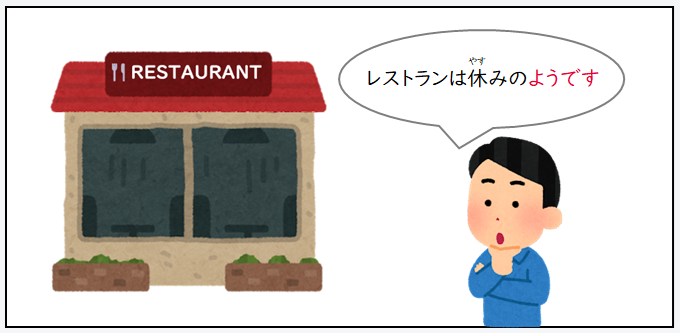
状況:レストランに着きました → 電気が点いていません
Situation: I arrived at the restaurant → The lights were off
推測:レストランは休みのようです
Subjective Inference: It looks like the restaurant is closed.

英語-320x180.png)
英語.png)
英語版.png)