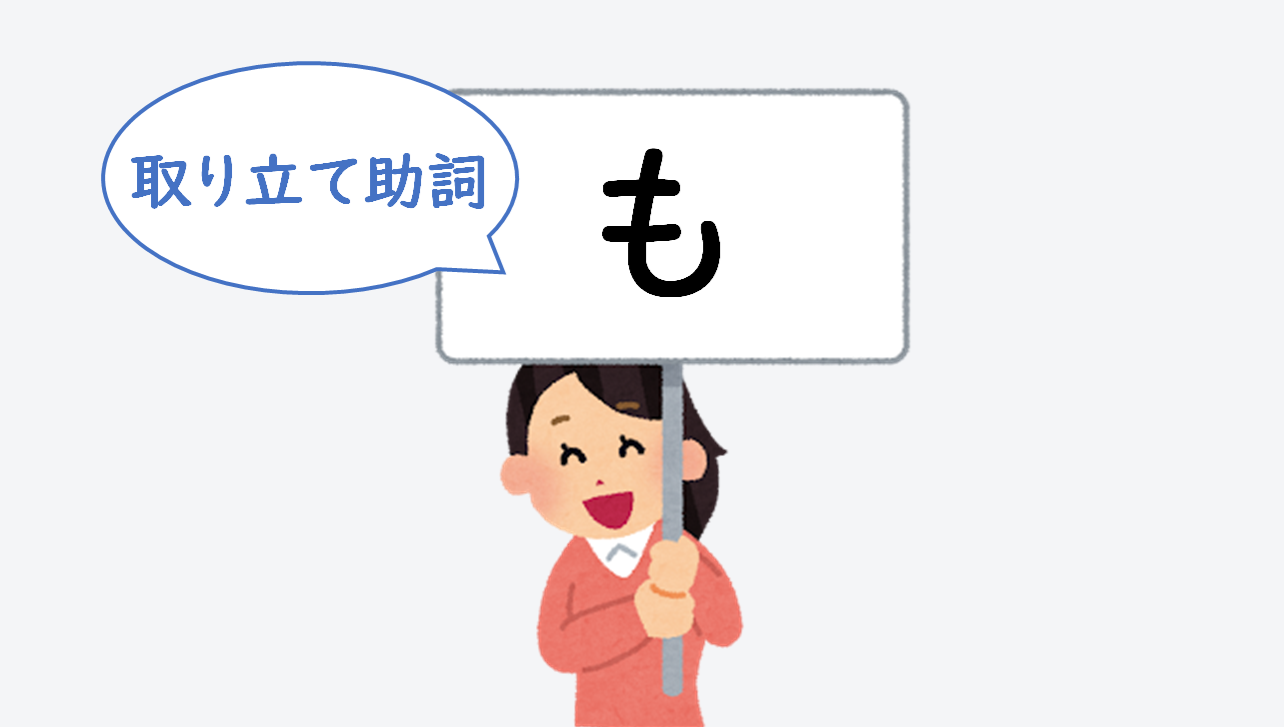
Addition (also / too)
Sentence Pattern: Noun + も
Grammar Explanation: also / too (Adding another item or person)

Ex.: 彼も日本人です。
Rm.: Kare mo Nihonjin desu.
En.: He is also Japanese.

Ex.: 今日も雨です。
Rm.: Kyou mo ame desu.
En.: It is raining today too.

Ex.: 私も日本へ留学したいです。
Rm.: Watashi mo Nihon e ryugaku shitai desu.
En.: I also want to study in Japan.

Ex.: 私も日本のアニメが大好きです。
Rm.: Watashi mo Nihon no anime ga daisuki desu.
En.: I also love Japanese anime.
Listing (A also, B also)
Sentence Pattern: Noun + も
Grammar Explanation: A also, B also (Listing multiple items)

Ex.: 彼は勉強もできるし、スポーツもできます。
Rm.: Kare wa benkyou mo dekiru shi, supootsu mo dekimasu.
En.: He is good at both academics and sports.

Ex.: 私は犬も猫も好きです。
Rm.: Watashi wa inu mo neko mo suki desu.
En.: I like both dogs and cats.

Ex.: 彼はルックスもいいし、人柄も最高です。
Rm.: Kare wa rukkusu mo ii shi, hitogara mo saikou desu.
En.: He is good-looking and has a great personality.

Ex.: 誰も彼もが成功できるわけではありません。
Rm.: Dare mo kare mo ga seikou dekiru wake dewa arimasen.
En.: Not everyone can succeed.
Emphasis (even ~ / not even ~)
Sentence Pattern: Verb (Dictionary Form) + のも / Verb (Dictionary Form) + ことも
Grammar Explanation: The particle も is used after a nominalized verb to emphasize the action, meaning “even doing ~” or “not even doing ~”.

Ex.: 喉が痛くて水を飲むのも辛いです。
Rm.: Nodo ga itakute mizu o nomu no mo tsurai desu.
En.: My throat hurts so much that even drinking water is painful.

Ex.: あんな奴の顔なんて見るのも嫌です。
Rm.: Anna yatsu no kao nante miru no mo iya desu.
En.: I can’t even stand looking at someone like him (her).

Ex.: 彼は交通事故の後遺症で立つこともできません。
Rm.: Kare wa koutsuu jiko no kouishou de tatsu koto mo dekimasen.
En.: He can’t even stand because of the aftereffects of a traffic accident.

Ex.: 彼女は料理どころか野菜を切ることもできません。
Rm.: Kanojo wa ryouri dokoro ka yasai o kiru koto mo dekimasen.
En.: She can’t even cut vegetables, let alone cook.
Emphasis (even ~ / not even ~)
Sentence Pattern: Noun + も
Grammar Explanation: even ~ / not even ~ (Emphasis)

Ex.: 片仮名はおろか平仮名もわかりません。
Rm.: Katakana wa oroka hiragana mo wakarimasen.
En.: I don’t even know hiragana, let alone katakana.

Ex.: この仕事は初めての人でもできる仕事です。
Rm.: Kono shigoto wa hajimete no hito demo dekiru shigoto desu.
En.: This is a job that even first-time workers can do.

Ex.: 恐ろしくて声も出ませんでした。
Rm.: Osoroshikute koe mo demasen deshita.
En.: I was so scared that I couldn’t even speak.

Ex.: ショックすぎて涙もでません。
Rm.: Shokku sugite namida mo demasen.
En.: I am so shocked that I can’t even cry.
Emphasis (as much as ~ / as many as ~ / as long as ~)
Sentence Pattern: Quantity + も
Grammar Explanation: も emphasizes a surprisingly large amount or number.

Ex.: このワンピースは5万円もします。
Rm.: Kono wanpiisu wa go-man-en mo shimasu.
En.: This dress costs as much as 50,000 yen.

Ex.: 時計の修理に3万円もかかりました。
Rm.: Tokei no shuuri ni san-man-en mo kakarimashita.
En.: It cost as much as 30,000 yen to repair my watch.

Ex.: 家から駅まで歩いて1時間もかかります。
Rm.: Ie kara eki made aruite ichi-jikan mo kakarimasu.
En.: It takes as long as an hour to walk from my house to the station.

Ex.: この拉麺店に入るのに、2時間も並びました。
Rm.: Raamen-ten ni hairu noni, ni-jikan mo narabimashita.
En.: I waited in line for two whole hours to get into the ramen shop.
Emphasis (not even ~ / less than ~)
Sentence Pattern: Quantity + も + Negative Form
Grammar Explanation: も emphasizes that the amount or number is extremely small. It means “not even ~.”

Ex.: 通帳にはあと500円もありません。
Rm.: Tsuuchou ni wa ato go-hyaku-en mo arimasen.
En.: I don’t even have 500 yen left in my bank account.

Ex.: 彼はベッドに入って5分も経たないうちに寝てしまいました。
Rm.: Kare wa beddo ni haitte go-fun mo tatanai uchi ni nete shimaimashita.
En.: He fell asleep less than five minutes after getting into bed.

Ex.: ここから駅まで100mもありません。
Rm.: Koko kara eki made hyaku-meetoru mo arimasen.
En.: It isn’t even 100 meters from here to the station.

Ex.: 彼は正座を1分も我慢できません。
Rm.: Kare wa seiza o ippun mo gaman dekimasen.
En.: He can’t even sit in seiza for one minute.
Emphasis (not even one ~)
Sentence Pattern: One + も + Negative Form
Grammar Explanation: も is used with a negative form to emphasize that not even one person, thing, or unit exists or is possible. It means “not even one ~”.

Ex.: 今日はお客さんが一人も来ませんでした。
Rm.: Kyou wa okyaku-san ga hitori mo kimasen deshita.
En.: Not even one customer came today.

Ex.: 彼女のことを一日も忘れたことはありません。
Rm.: Kanojo no koto o ichi-nichi mo wasureta koto wa arimasen.
En.: I haven’t forgotten her for even a single day.

Ex.: この池には魚が一匹もいません。
Rm.: Kono ike ni wa sakana ga ippiki mo imasen.
En.: There isn’t even one fish in this pond.

Ex.: 私は1回も煙草を吸ったことがありません。
Rm.: Watashi wa ikkai mo tabako o sutta koto ga arimasen.
En.: I have never smoked, not even once.

英語-320x180.png)
英語.png)
英語.png)