お正月関係の日本語(Japanese New Year Vocabulary)
お正月関係の日本語(Japanese New Year Vocabulary)
.png)
| Japanese | English |
|---|---|
| 門松 | Kadomatsu (New Year pine decoration) |
| 注連縄 | Shimenawa(Sacred straw rope) |
| 鏡餅 | Kagamimochi (Decorative rice cakes for the New Year) |
| 御節料理 | Osechi Ryori(Traditional New Year’s cuisine) |
| お雑煮 | Ozoni(New Year’s rice cake soup) |
| お屠蘇 | Otoso(New Year’s spiced sake) |
| 祝箸 | Iwaibashi(Ceremonial chopsticks used for New Year’s) |
| お年玉 | Otoshidama(New Year’s money gift) |
| 年賀状 | Nengajo (New Year’s greeting cards) |
| ぽち袋 | Pochibukuro(Decorative envelopes for gift money) |
| 福袋 | Fukubukuro(Lucky bags with mystery items) |
| 初詣 | Hatsumode(First shrine visit of the year) |
| お賽銭 | Osaisen(Monetary offering at a shrine) |
| お御籤 | Omikuji (Fortune slips drawn at shrines) |
| 破魔矢 | Hamaya(Decorative arrow to ward off evil spirits) |
| 初夢 | Hatsuyume(First dream of the year) |
| 書き初め | Kakizome(First calligraphy of the year) |
| 七草粥 | Nanakusagayu(Seven-herb rice porridge eaten on Jan 7) |
| 鏡開き/鏡割り | Kagamibiraki/Kagamiwari(Rice cake breaking ceremony) |
| 小正月 | Koshogatsu(Little New Year, celebrated on Jan 15) |
| 左義長/どんど焼き | Sagicho/Dondoyaki(New Year’s bonfire event) |
| 大掃除 | Osoji(Year-end general cleaning) |
| 餅つき | Mochitsuki(Mochi pounding) |
| 年越し蕎麦 | Toshikoshi Soba(New Year’s Eve soba noodles) |
| 除夜の鐘 | Joya no Kane(108 bell rings on New Year’s Eve) |
お正月行事の日本語(Japanese New Year Activity Vocabulary)
お正月行事の日本語(Japanese New Year Activity Vocabulary)
■年越し蕎麦
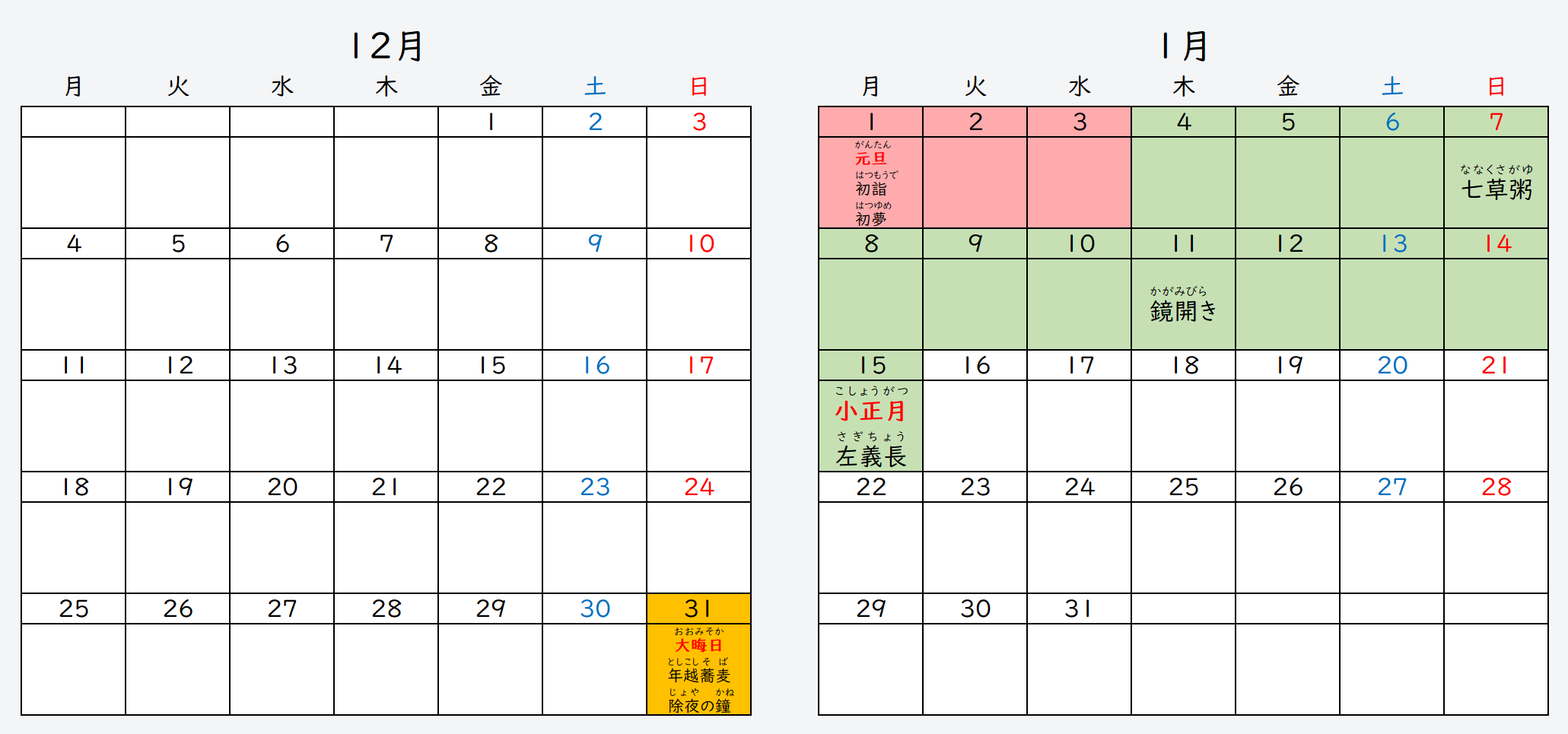
年越し蕎麦とは、大晦日に幸運を願って食べる麺のことです。
“Toshikoshi Soba” is a type of noodle dish eaten on New Year’s Eve with the hope of bringing good fortune.
■除夜の鐘
除夜の鐘とは、大晦日の午後12時頃から元旦にかけて,仏教寺院で鐘を打つ儀式のことです。仏教では人には108つの煩悩があるとされており、その108つの煩悩を除く意味を込めて、鐘を108回突き鳴らします。
“Joya no Kane” is a ceremony in which bells are rung at Buddhist temples from around midnight on New Year’s Eve to New Year’s Day. In Buddhism, it is said that humans have 108 earthly desires, and the bell is rung 108 times with the intention of removing these desires.
■日本のお正月
日本のお正月とは新暦1月のことです。日本ではお正月に、正月飾りや正月料理を用意して、幸福と繁栄の神様である「年神様」を迎えます。1月1日を元旦といい、元旦から3日までを「正月三が日」、元旦から7日までを「松の内」と呼びます。元旦から1月15日までを「松の内」と呼ぶところもあります。
“The Japanese New Year” refers to the month of January in the Gregorian calendar. In Japan, people prepare New Year’s decorations and dishes to welcome Toshigami-sama, the god of happiness and prosperity. January 1st is called Gantan (New Year’s Day), and the first three days of the year (January 1st to 3rd) are called “Shogatsu Sanganichi.” The period from January 1st to 7th is called “Matsu no Uchi,” although in some regions it lasts until January 15th.
■初夢
「初夢」とは、新しい年を迎え、最初に見た夢のことです。一般的に元旦の夜に見た夢のことを指します。日本には「一富士二鷹三茄子」という言葉があり「初夢に見ると縁起が良い」とされています。「一番良いのは富士山、二番目は鷹、三番目は茄子」という意味です。
“Hatsuyume” is the first dream you have in the new year. It generally refers to a dream you have on the night of New Year’s Day. In Japan, there is a saying that goes, “One Fuji, two hawks, three eggplants,” and it is said that if you see this in your first dream, it is auspicious. It means “The best is Mt. Fuji, the second is a hawk, and the third is eggplant.”
■七草粥
七草粥とは、松の内の最後の日である1月7日に、無病息災や立身出世を願って食べるお粥のことです。七草粥の「七草」は、芹、薺、御形、菘、蘿蔔、仏の座、繁縷の七種類です。
“Nanakusa-gayu (rice porridge with seven herbs)” is rice porridge eaten on January 7th, the last day of the New Year’s holiday, to pray for health and success in life. The seven herbs in nanakusa-gayu are water parsley, shepherd’s purse, gogyo (a Japanese parsley), turnip, Japanese radish, henbit, and chickweed.
■鏡開き(鏡割り)
鏡開き(鏡割り)とは、1月11日に、年神様にお供えしていた鏡餅を割って、お雑煮やお汁粉に入れて食べる行事のことです。
“Kagami-biraki (Kagami-wari)” is an event on January 11th when the Kagami mochi (rice cake) that was offered to the New Year’s deity is broken and eaten in ozoni (a soup with rice cakes) or shiruko (a sweet red bean soup).
■左義長(どんど焼き/とんど祭り)
左義長とは、1月15日の小正月に、正月飾りや書き初めを燃やす行事のことで、その煙に乗って「年神様」が天上に帰ってゆくと言われています。この火で焼いたお餅等を食べると無病息災で過ごすことができ、燃やした書き初めの火が高く上がれば字が上手になると言われています。左義長を「どんど焼き」「とんど祭り」と呼ぶ地域もあります。
“Sagicho” is an event held on January 15th, called the Little New Year, where New Year’s decorations and calligraphy are burned. It is said that the ‘New Year’s god’ returns to heaven on the smoke. Eating rice cakes and other foods roasted over this fire is believed to bring good health and protection from illness. Also, if the flame of the burning calligraphy rises high, it is said that one’s calligraphy skills will improve. In some regions, Sagicho is known as ‘Dondo Yaki’ or the ‘Tondo Festival.’