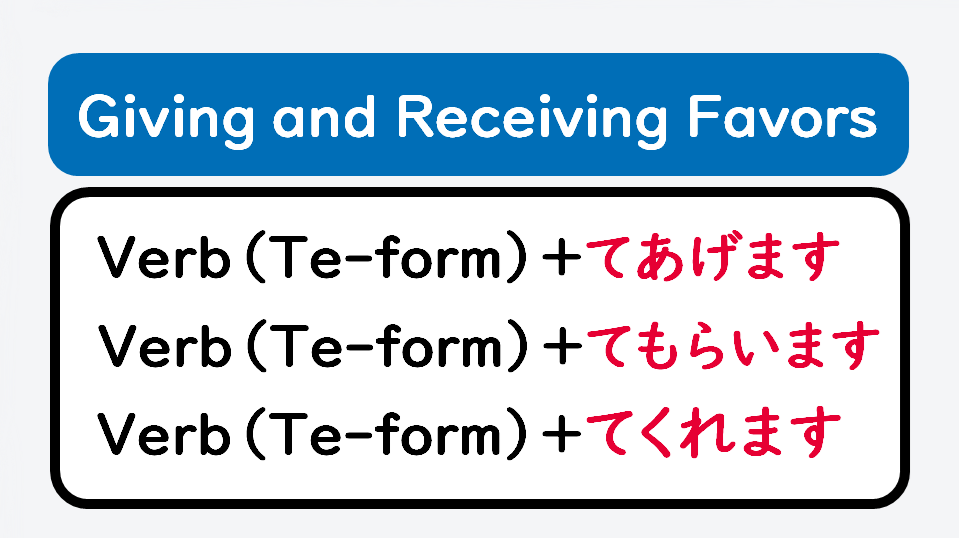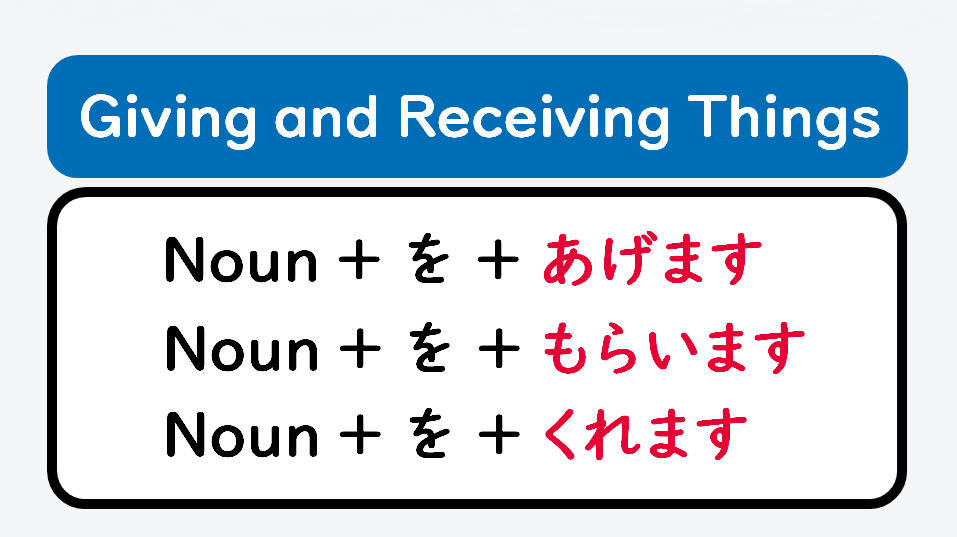
Giving and Receiving Things: あげます・もらいます・くれます
物の授受表現(Giving and Receiving Things)
.png)
Sentence Pattern: Noun + を + あげます
女性.png)
私は佐藤さんにお土産をあげました。
Ms. Suzuki: I gave Mr. Sato a souvenir.
Sentence Pattern: Noun + を + もらいます
男性.png)
私は鈴木さんにお土産をもらいました。
Mr. Sato: I received a souvenir from Ms. Suzuki.
Sentence Pattern: Noun + を + くれます
鈴木さんは私にお土産をくれました。
Mr. Sato: Ms. Suzuki gave me a souvenir.

「くれます」文型で物を受け取る人は「私」または「話し手が自分側だと思っている人」です。
In the sentence pattern “くれます,” the recipient is “me” or “someone so close to the speaker as to be considered part of the speaker’s in-group.”
Reference: Minna no Nihongo Lesson 7
Giving and Receiving Things: さしあげます・もらいます・くれます
物の授受表現(Giving and Receiving Things)
.png)
Sentence Pattern: Noun + を + さしあげます
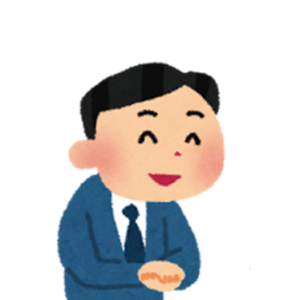
私は社長にお土産をさしあげました。
Employee: I gave the company president a souvenir.
「さしあげます」は「あげます」の謙譲語です。
“さしあげます” is the humble form of “あげます.”
Sentence Pattern: Noun + を + もらいます
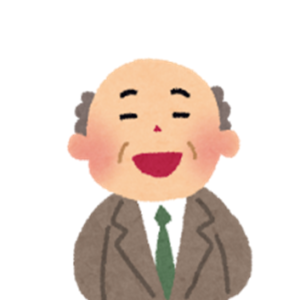
私は社員にお土産をもらいました。
President: I received a souvenir from an employee.
Sentence Pattern: Noun + を + くれます
社員は私にお土産をくれました。
President: The employee gave me a souvenir.
「くれます」文型で物を受け取る人は「私」または「話し手が自分側だと思っている人」です。
In the sentence pattern “くれます,” the recipient is “me” or “someone so close to the speaker as to be considered part of the speaker’s in-group.”
「あげます・さしあげます」の文型は、直接相手に使うと失礼になります。
特に「下→上」の関係では使わないようにしましょう。
Sentences using “あげます・さしあげます” may sound impolite when used directly to the listener. In particular, they should not be used when a person of lower status speaks to someone of higher status.
👇下記の表現は避けましょう(Avoid the following expressions)
.png)
社長、お土産をあげます。どうぞ。
Employee: Boss, I am giving you a souvenir. Take it.
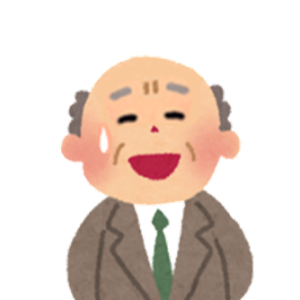
・・・・・・・・・。
President: …
👇下記の表現を使いましょう(Use the following expressions)
.png)
社長、お土産です。どうぞ。
Employee: Boss, this is a souvenir for you. Please accept it.
どうもありがとう。
President: Thank you very much.
Giving and Receiving Things: あげます・いただきます・くださいます
物の授受表現(Giving and Receiving Things)
.png)
Sentence Pattern: Noun + を + あげます
私は社員にお土産をあげました。
President: I gave an employee a souvenir.
Sentence Pattern: Noun + を + いただきます
私は社長にお土産をいただきました。
Employee: I received a souvenir from the president.
「いただきます」は「もらいます」の謙譲語です。
“いただきます” is the humble form of “もらいます.”
Sentence Pattern: Noun + を + くださいます
社長は私にお土産をくださいました。
Employee: The president gave me a souvenir.
「くださいます」は「くれます」の尊敬語です。
“くださいます” is the honorific form of “くれます.”
「くれます」文型で物を受け取る人は「私」または「話し手が自分側だと思っている人」です。
In the sentence pattern “くれます,” the recipient is “me” or “someone so close to the speaker as to be considered part of the speaker’s in-group.”
Giving and Receiving Things: やります・もらいます・くれます
物の授受表現(Giving and Receiving Things)
.png)
Sentence Pattern: Noun + を + やります

僕は猫に餌をやりました。
Boy: I fed the cat.
「やります」は、動物や植物、または目下の人に物をあげるときに使います。
目上の人に対して使うのは失礼なので、使わないようにしましょう。
“やります” is used when giving something to animals, plants, or someone of lower status.
Using it toward someone of higher status is considered rude, so it should be avoided.
Sentence Pattern: Noun + を + もらいます
.png)
私は男の子に餌をもらいました。
Cat: I received food from the boy.
Sentence Pattern: Noun + を + くれます
男の子は私に餌をくれました。
Cat: The boy fed me.
「くれます」文型で物を受け取る人は「私」または「話し手が自分側だと思っている人」です。
In the sentence pattern “くれます,” the recipient is “me” or “someone so close to the speaker as to be considered part of the speaker’s in-group.”

英語-320x180.png)
英語.png)