Grammar

Advertisements
Grammar

Japanese Grammar: How to Say “Start ~ing(~始めます)”and“Finish ~ing(~終わります)”

Japanese Grammar: Learn how to use ~始めます (start ~ing) and ~終わります (finish ~ing) with sentence patterns, practical examples, illustrations, and English translations. Ideal for JLPT N5–N4 beginners.
Grammar

Japanese Grammar: まだ~ていません (Not Yet)

Japanese Grammar: Learn How to say “Not Yet” (まだ~ていません) in Japanese. This beginner-friendly guide covers sentence patterns, example sentences, illustrations, and English translations for JLPT N5–N4 learners.
Grammar

Japanese Grammar: The Difference Between“てから”and“あとで”(After)

Japanese grammar: “てから” vs. “たあとで.” Learn their usage, key differences, and how to express the order of actions with example sentences, illustrations, and English translations. Ideal for beginners and JLPT N5–N4 learners.
Advertisements
Grammar

Japanese Grammar: Using“て”and“で”to Express the Order of Actions (順序)

Learn Japanese: The verb te-form for expressing the sequence of actions. Includes example sentences, illustrations, and English translations for beginners and JLPT N5–N4 learners.
Grammar

Japanese Grammar:“て”and“で”– Parallel Usage

Learn Japanese grammar: master the parallel use of て/で. Learn to express “…and…” and “both…and…” with practical examples and English translations. Ideal for beginners and JLPT N5–N4 learners.
Grammar

Japanese Grammar: “て” and “で” – How to Express Reasons and Causes

Japanese Grammar: Learn how to use “て/で” to express reasons and causes. This guide for beginners and JLPT N5–N4 learners includes practical examples, illustrations, English translations, and common mistakes.
Grammar

Japanese Grammar: から vs. ので – How to Express Reasons and Causes

Japanese Grammar: Learn the difference between “から” and “ので” when expressing reasons and causes. Discover how to use these expressions naturally with practical example sentences, illustrations, and English translations.
Grammar

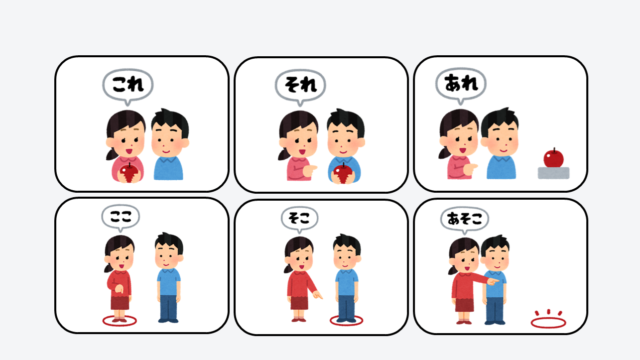
Japanese Grammar: Demonstrative Words (これ、それ、あれ、どれ…)

Japanese Grammar: Learn Japanese demonstratives (こそあど). Includes a complete list, usage, differences, examples, illustrations, and English translations. Easy-to-understand explanations for JLPT N5–N4 beginners.
Grammar

Japanese Grammar: How to Say“can”and“be able to”(~ことができます/~ができます)

Japanese Grammar: Learn ~ことができます and ~ができます. Covers ability, situational possibility, and completion, with examples, illustrations, and English translations for JLPT N4-N5 beginners.
Grammar

Japanese Grammar: Should~(べきです) – Usage & Examples

Learn Japanese grammar 「~べきです」, meaning “should” based on common sense. Study practical examples, illustrations, and English explanations for beginners and JLPT N4–N5 learners.
Advertisements